Qoute Now
Find out more about how we can support your goals by filling out the form or emailing us at

Potential purchasers often start with the same concern: what exactly makes coated aluminum sheet different from plain aluminum, and how do you avoid ordering the wrong product. The questions below reflect that demand and provide practical, original answers for sourcing decisions.
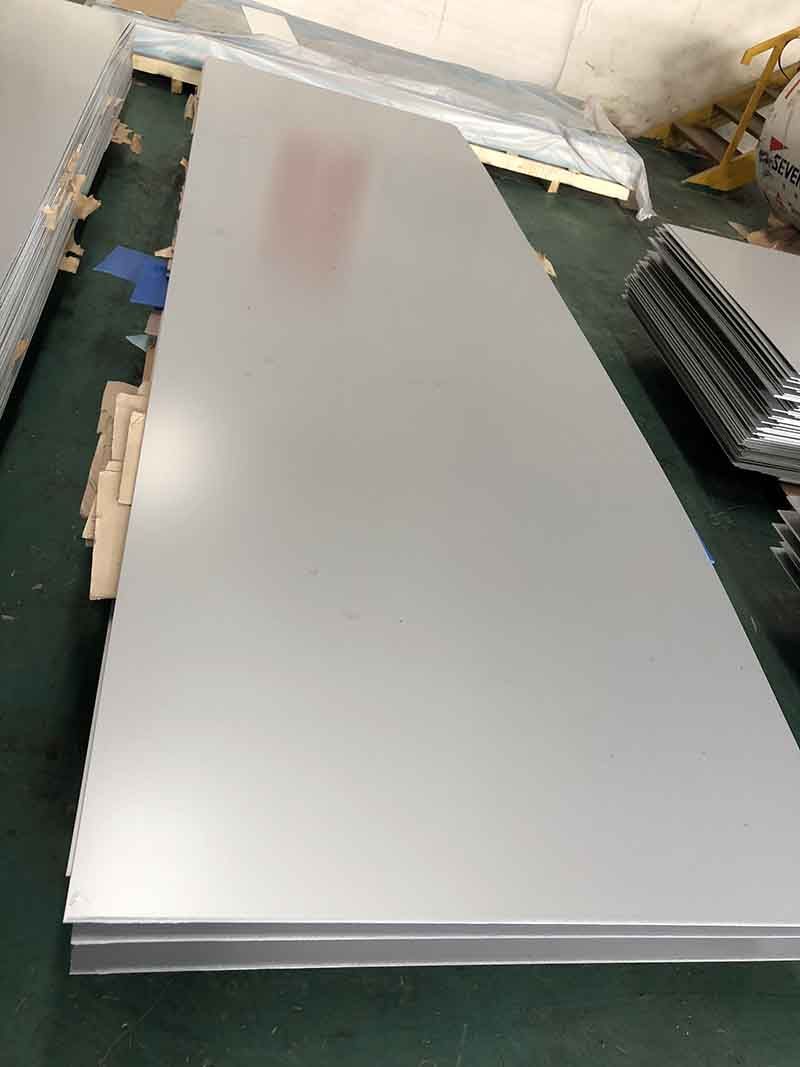
This is one of the most common questions because many first-time purchasers see both options in quotations and assume the cheaper one is close enough. In practice, PE and PVDF serve different environments.
PE, or polyester coating, is widely chosen for indoor decoration, signage, ceiling panels, and applications where the product does not face constant UV radiation, salt spray, or heavy weather exposure. It offers good color variety, decent surface smoothness, and a lower cost.
PVDF, or polyvinylidene fluoride coating, is preferred for building facades, roofing, exterior cladding, transportation equipment, and other demanding outdoor uses. It has stronger weather resistance, better color retention, and improved resistance to chalking and fading.
A simple way to judge them is this: if appearance over time matters more than the initial price, PVDF is usually the safer choice for outdoor projects.
| Item | PE Coated Aluminum Sheet | PVDF Coated Aluminum Sheet |
|---|---|---|
| Typical use | Indoor and mild environments | Outdoor and harsh environments |
| Cost | Lower | Higher |
| UV resistance | Moderate | Strong |
| Color retention | Good | Better |
| Recommended for facade use | Usually no | Yes |
When requesting quotations, ask not only for coating type, but also for coating thickness, paint brand, gloss, and expected service environment. That is where many price differences begin.
This question appears frequently because many people focus only on alloy and forget that total performance depends on both metal thickness and paint system.
For signs and indoor decorative panels, thinner gauges are often acceptable. For roofing and wall cladding, the material must balance formability, flatness, wind resistance, and installation method. There is no single universal thickness, but these commercial ranges are commonly discussed:
| Application | Common Aluminum Thickness | Common Coating Suggestion |
|---|---|---|
| Indoor ceiling panels | 0.30 mm to 0.70 mm | PE |
| Advertising signs | 0.20 mm to 1.00 mm | PE |
| Roofing panels | 0.50 mm to 1.20 mm | PVDF or weather-resistant PE |
| Wall cladding | 0.70 mm to 2.00 mm | PVDF |
If the profile will be roll formed, bending performance matters as much as thickness. A harder temper may reduce forming quality. If the panel will remain flat and visible, surface consistency becomes more important.
A useful sourcing habit is to ask for these four numbers together: aluminum thickness, total coating thickness, top coat thickness, and back coat thickness. Without all four, comparing offers is difficult.
For companies also evaluating base materials for fabrication, coated aluminum sheet specifications should be reviewed together with alloy, temper, width tolerance, and coating adhesion.
This is a very real question from people switching from steel products. Aluminum does not rust in the same way carbon steel does, but that does not mean every coated aluminum product performs equally well outdoors.
Aluminum naturally forms a protective oxide layer. The coating adds another barrier against moisture, pollution, and UV exposure. However, outdoor life still depends on several variables:
Alloy selection.
Pretreatment quality.
Paint system.
Coating thickness.
Edge protection.
Local environment, especially coastal or industrial areas.
For example, a low-cost PE coated sheet may look attractive at the time of delivery but can lose gloss faster in hot sun or marine air. A properly produced PVDF coated product generally performs better in these conditions.
Another issue often missed in online discussions is cut edge exposure. Even when the face coating is excellent, poorly handled edges, scratched surfaces, or trapped water can shorten service life. So the right question is not simply, "Will it rust?" It is, "How long will the coating system remain stable in my environment?"
If your project is near the coast, ask suppliers for salt spray test data, UV resistance data, and coating warranty scope. Those answers are more useful than a vague promise of "outdoor grade."
This is among the hottest quotation-related questions because offers can differ sharply even when the product name looks identical.
The main reason is that the same product title can hide major technical differences. Price is affected by:
| Price Factor | How It Changes Cost |
|---|---|
| Aluminum ingot price | Moves with market fluctuations |
| Alloy and temper | Some grades cost more to produce |
| Metal thickness | Thicker material increases cost directly |
| Coating type | PVDF costs more than PE |
| Paint brand and resin quality | Premium systems cost more |
| Coating thickness | Heavier coating raises cost |
| Width and special color | Custom runs may increase cost |
| Protective film and packing | Export packing adds cost |
| Order quantity | Larger runs often improve pricing |
A low quotation may reflect thinner aluminum than requested, a lighter paint layer, recycled feedstock of inconsistent quality, or weaker packing for export transport. That is why price should never be compared from one line only.
A practical request format is: alloy, temper, thickness, width, coating type, coating thickness, color code, application, quantity, and destination port. Clear RFQs usually receive more accurate offers.
This is a high-intent question because many first-time purchasers worry about receiving material that looks good in photos but performs poorly after installation.
Start with visible checks and then move to technical verification.
Visual review
Ask for recent production photos or videos showing color consistency, gloss uniformity, edge condition, and packing method. Surface defects such as roller marks, pinholes, dents, or coating streaks should be reviewed carefully.
Sample evaluation
Request a physical sample if the project is color sensitive or exposed outdoors. A sample helps confirm finish, flexibility, and scratch response.
Technical documents
Ask for:
Test report for coating adhesion.
Pencil hardness or equivalent surface hardness data.
MEK resistance or solvent resistance, if relevant.
Salt spray or weathering data for outdoor use.
Thickness inspection report.
Alloy and temper confirmation.
Questions worth asking suppliers
Is the quoted thickness nominal or minimum actual thickness?
What is the top coat and back coat thickness?
Is the paint PE, SMP, HDP, or PVDF?
What pretreatment process is used?
Is there batch-to-batch color control?
These questions often reveal the difference between a trading offer and a well-controlled manufacturing offer.
For projects that require color stability and forming performance, many purchasers also compare color coated aluminum sheet options based on gloss tolerance, bendability, and coating warranty language rather than price alone.
When reviewing supplier catalogs, use actual stock images only as a starting point. Final decisions should rely on the agreed specification and inspection data.
 Products
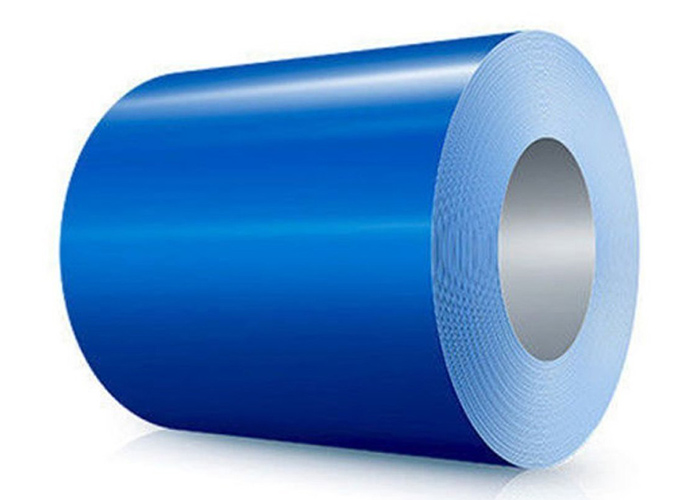
HDPE aluminum coil with stable coating quality, easy processing, and reliable weather resistance, ideal for interior and general outdoor applications at a lower cost. Get price now!
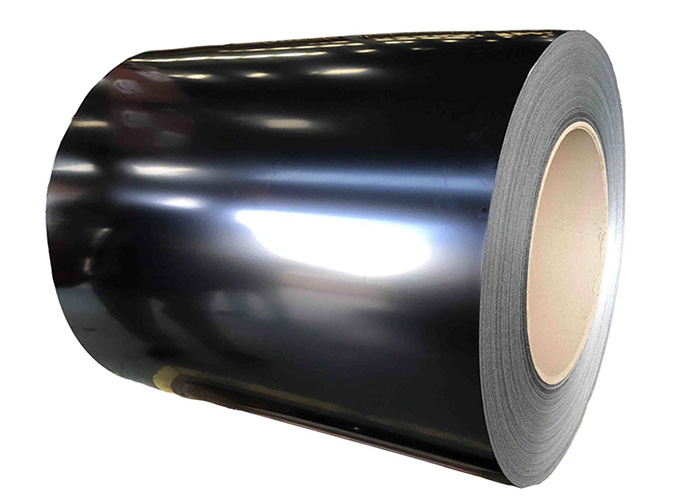
Premium FEVE coated aluminum coil with excellent formability & color stability. Perfect for curtain walls, aluminum composite panels, outdoor decoration & high-end building projects worldwide. Inquire now!
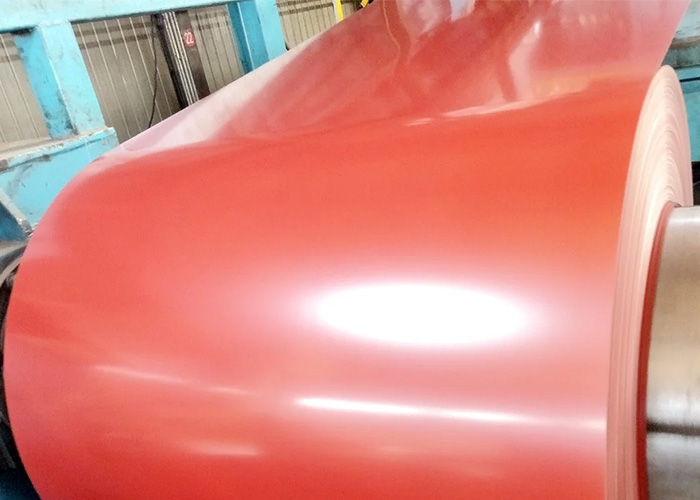
Our PVDF aluminum coil has excellent weather resistance,long service life up to 20+ years outdoors,anti-fading, stable performance in harsh environments, ideal for exterior building cladding and outdoor applications. Inquire now!
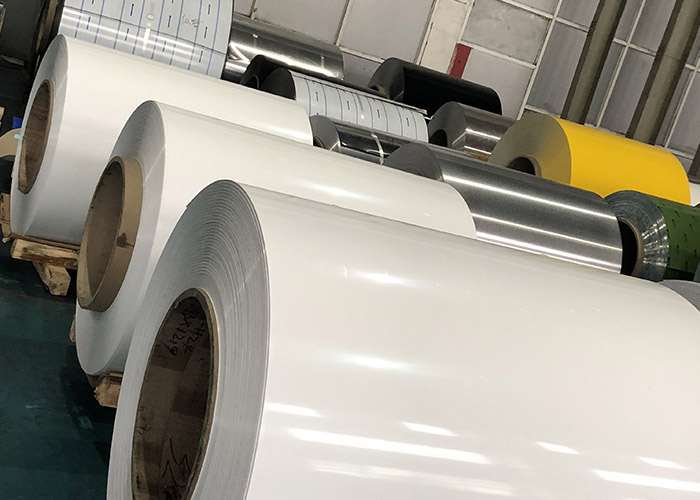
Our PE coated aluminum coil features excellent bending performance, wide color & alloy options, long service life and durable finish. Custom sizes & colors available to meet your project demands. Get Quote now!
Application
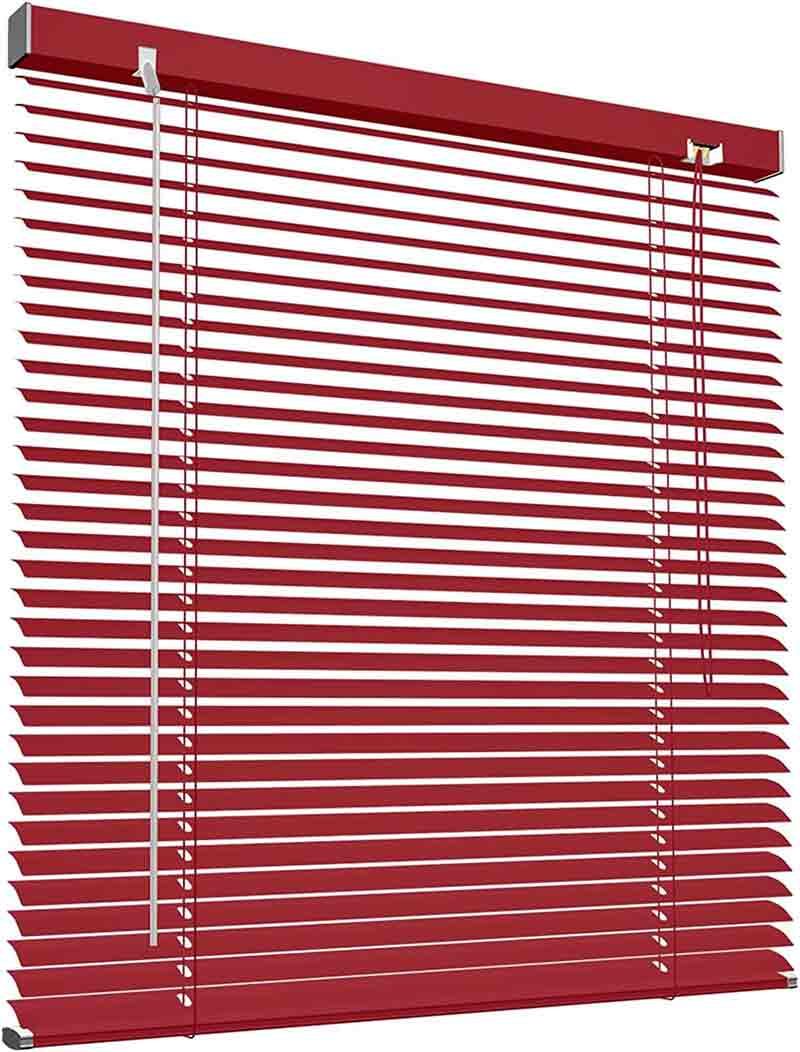
Today, Venetian blinds have long transcended their simple function of blocking light, becoming an important element in both home and commercial decoration, combining aesthetics and functionality. The widespread application of prepainted aluminum coils has
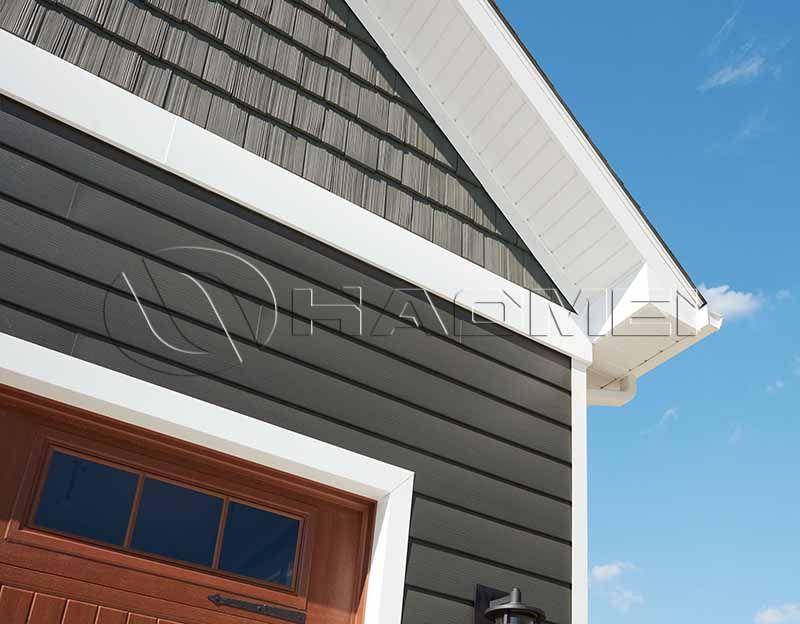
Learn what aluminum trim coil is, common alloys 1100/3003/3105/5052, popular sizes like 24×50, colors, applications, coating types, packaging, shipping and order terms for building exterior & interior trim.
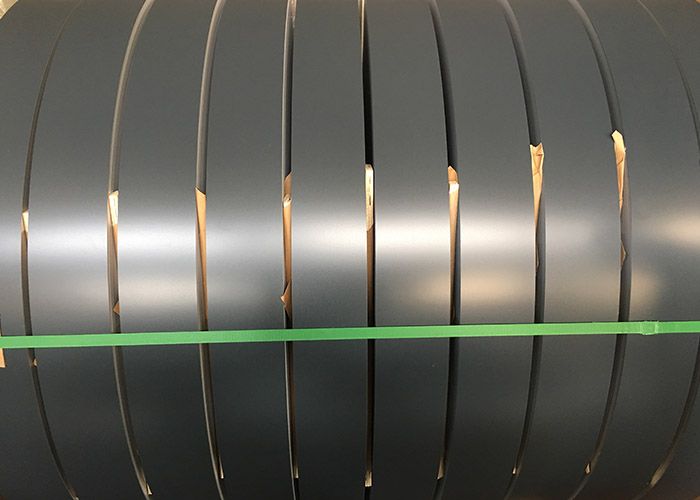
Color Coated Aluminum Coil Manufacturer for Ceiling | PE/PVDF coated, waterproof, anti-UV, long service life. Lightweight, easy fabrication, ideal for ceiling tiles, linear ceilings & decorative panels. Inquire now!
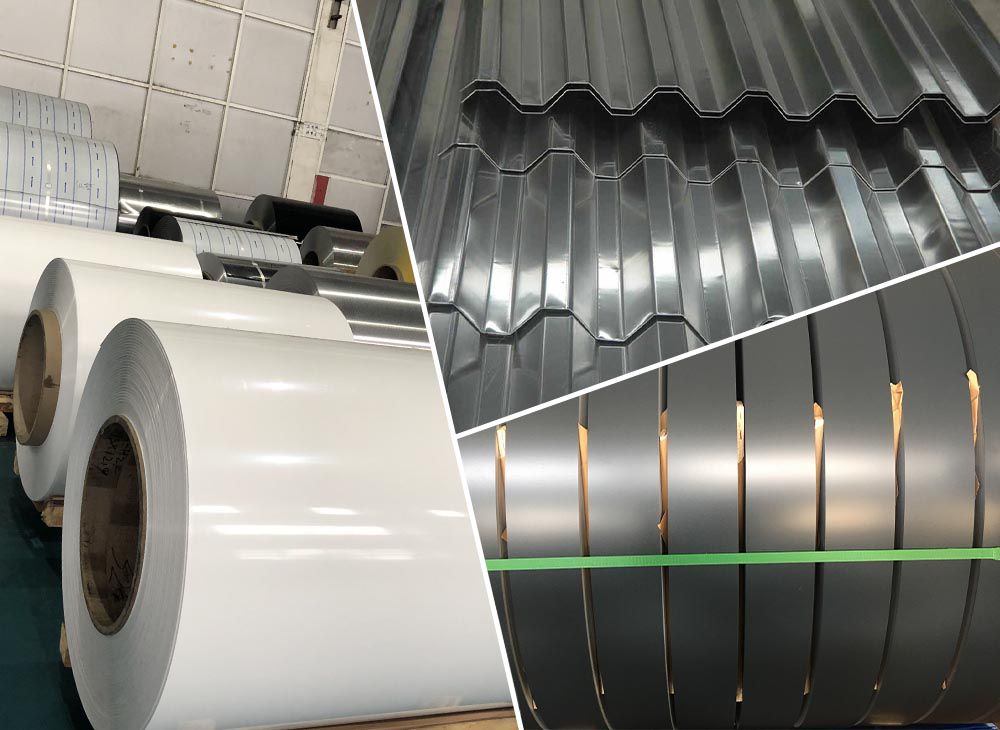
Aluminum roofing coilHaomei Aluminum's coated aluminum coil for roofing is well known for lightweight, high strength, weather resistance, and corrosion resistance, with a service life of 15-30 years. It also has excellent processability and can be ada
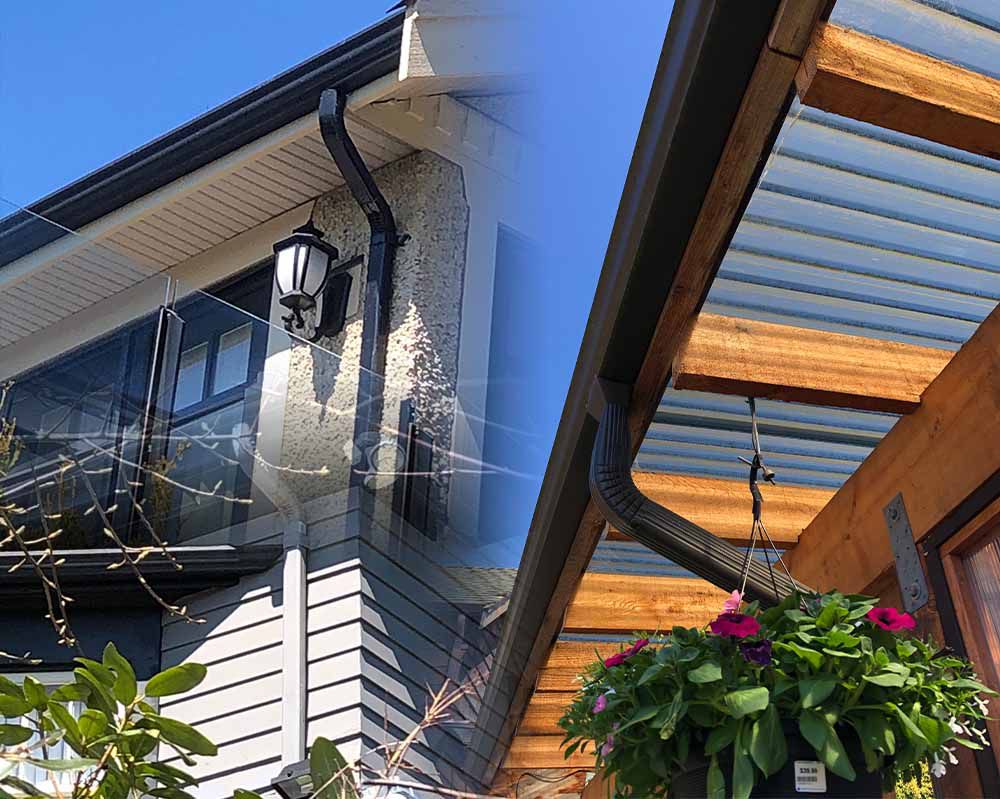
Aluminum gutter coil roll available in popular colors and various sizes, featuring durability, corrosion resistance and easy installation for rain gutter systems. Inquire now!
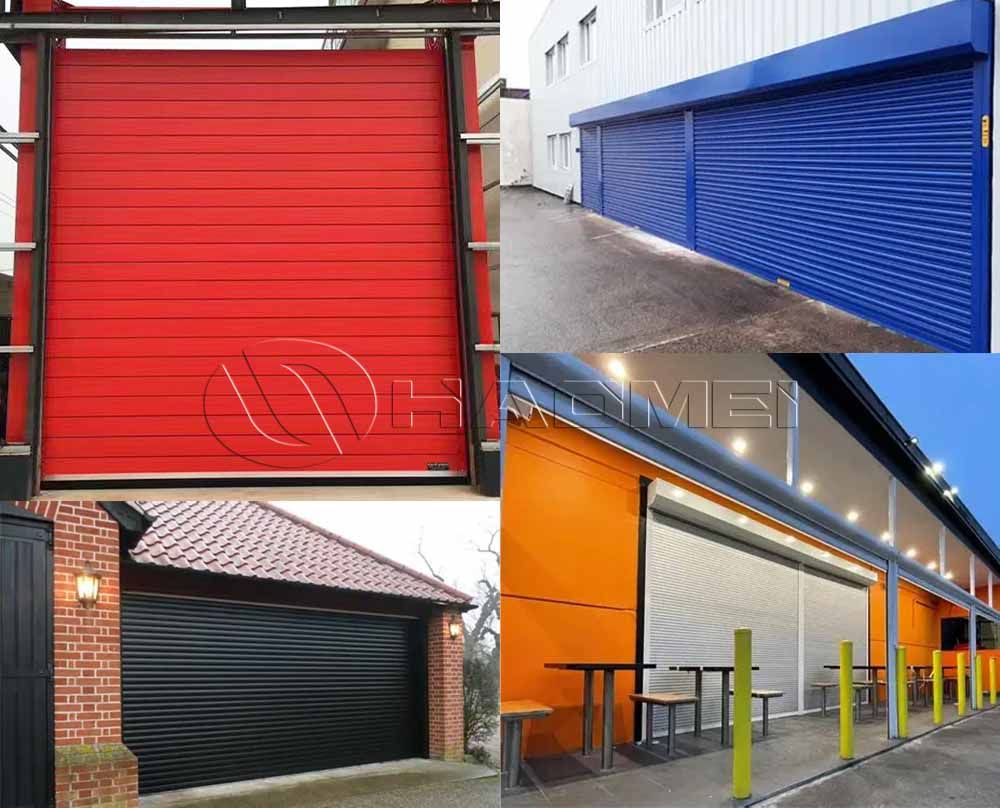
Color aluminum coils: lightweight, corrosion-resistant, durable & color-rich, ideal for roller shutters in shops, garages, factories. Various specs, alloy options, custom colors & professional packaging for all scenarios. Learn more.
Blog
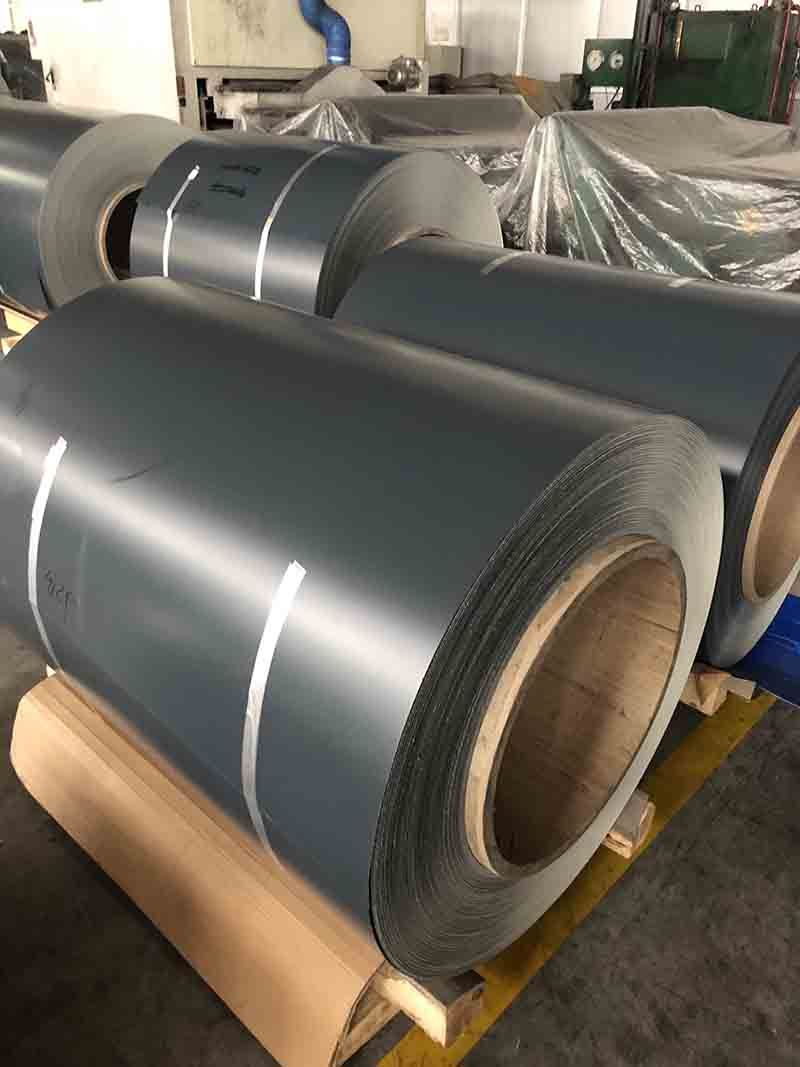
Learn about the systematic quality control tests for coated aluminum coil coatings, including appearance, core performance (adhesion, thickness, hardness), environmental adaptability and auxiliary tests to ensure durability, safety and compliance.
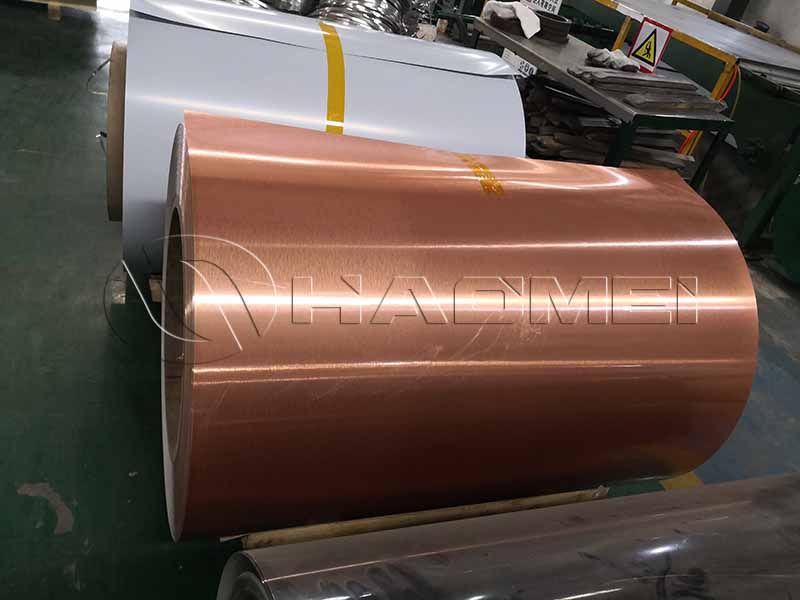
In the coil coated aluminium processing industry, coating color consistency is one of the core indicators for measuring product quality. Whether it's building curtain walls, interior ceilings, appliance casings, or industrial plant decoration, color d

Hot questions on coated aluminum sheet answered clearly, including coating types, thickness, outdoor use, pricing, and quality checks.
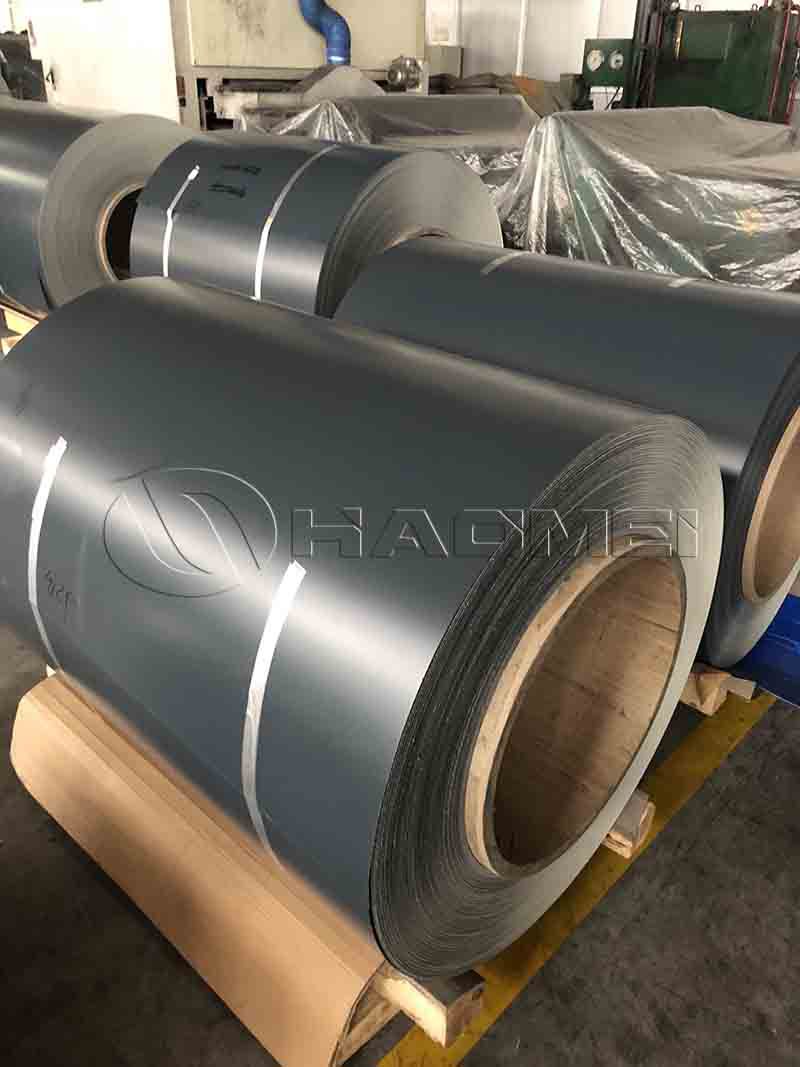
In industrial manufacturing and building envelope sectors, "replacing steel with coated aluminum" has become a significant trend in lightweight and green transformation. Color-coated steel coils (PPGI/PPGL), as traditional mainstream materials,
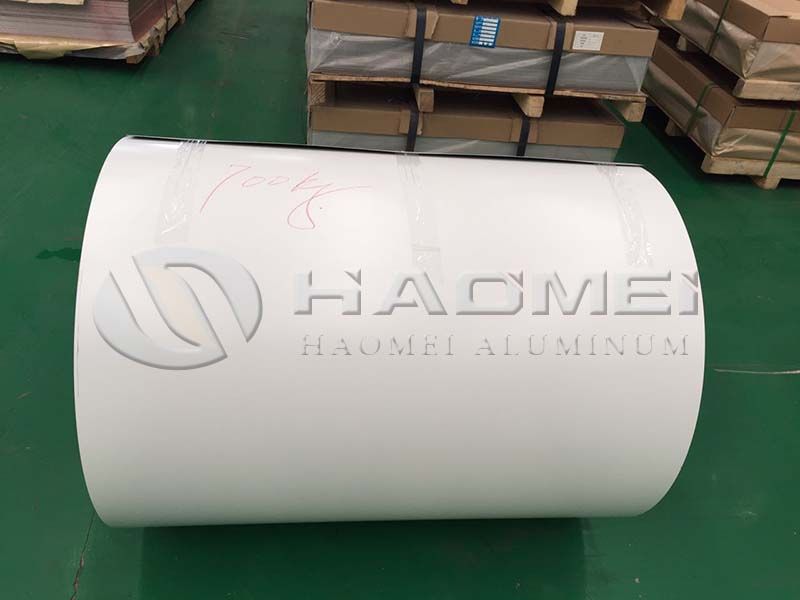
For B2B construction/decoration/industrial buyers: A complete guide to choosing a reliable color-coated aluminum sheet manufacturer. Check qualifications, product quality (1060/3003 alloy, PE/PVDF coating), customization, after-sales & pricing to avoid ri
FACTORY TOUR Haomei Aluminum is committed to technological innovation and equipment upgrading, equipping our production base with advanced intelligent production lines, including continuous coating lines, precision slitting machines and embossing equipment.
With near 30 years of 20 years of professional metal coating experience, we can provide you PE/PVDF/HDPE/FEVE coated aluminum coils with rich alloys and colors. We are also one of the few coating applicators that can replicates natural materials such as stones,marble,wood,on the surface of metal with paint.

Haomei Aluminum’s fully automatic high-speed color coating production lines, adopting advanced two-coat two-bake precision roller coating technology. The whole line is controlled by an intelligent automation system, ensuring uniform coating, stable speed and high efficiency. With precise control over coating thickness and closed-loop temperature control, our products feature excellent weather resistance, corrosion resistance, color stability, scratch resistance and long service life.